

Asbestos And The Law Conference 2026
5th June 2026 at The Liner Hotel, Liverpool

This annual conference is organised by the Merseyside Asbestos Victims Support Group and sponsored by a number of legal firms, of whom this year were Platinum Sponsor 12 King's Bench Walk and Silver Sponsors Clarion Solicitors, and KB Legal Costs Services. It was attended by representatives from several law firms and by CWU members: Jamie McGovern, Derek Maylor, and Chris Ingram and MAVSG officials.

Click the logo to go to the website of choice
The report below was written by Derek Maylor, ex-CWU Health & Safety Chair of the NW BT Unions Health & Safety Co-Ord and now trustee of MAVSG, with images and additional text by Chris Ingram, Editor Unionsafety.eu website.
Conference Chair:
Patrick Kerr, Barrister, 12 KBW
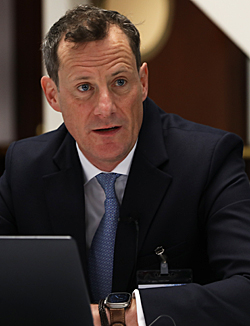 Patrick has particular expertise in mesothelioma claims, clinical negligence and sporting injuries and most of his claims involve catastrophic injuries.
He also has extensive experience in defending fraudulent claims. He is a member of the Northern Irish Bar and has provided expert evidence on English and Welsh law for other jurisdictions.
Speakers:
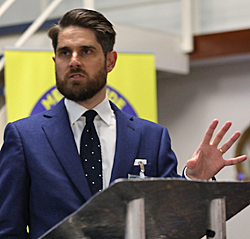 Dave Maddison Is a
Health and Safety Practitioner working for Pragma and Associates Ltd.
He provides expert advice and opinion in relation to asbestos-related disease. Provides assessments of asbestos exposure, including dose and apportionment, and consideration of employers’ and other duty holders’ actions in line with the knowledge and standards contemporaneous with exposure. He also is onvolved in rReviewing historical asbestos records, including survey reports, airborne fibre monitoring reports and records of asbestos removal/abatement work.
Dave Maddison Is a
Health and Safety Practitioner working for Pragma and Associates Ltd.
He provides expert advice and opinion in relation to asbestos-related disease. Provides assessments of asbestos exposure, including dose and apportionment, and consideration of employers’ and other duty holders’ actions in line with the knowledge and standards contemporaneous with exposure. He also is onvolved in rReviewing historical asbestos records, including survey reports, airborne fibre monitoring reports and records of asbestos removal/abatement work.
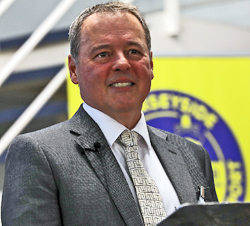 Ian Bailey,
KP Law is a partner in the product liability team at KP Law with over 30 years’ experience in conducting high-value and complex litigation on behalf of clients affected by dust diseases caused by exposure to asbestos dust and hazardous products.
Ian Bailey,
KP Law is a partner in the product liability team at KP Law with over 30 years’ experience in conducting high-value and complex litigation on behalf of clients affected by dust diseases caused by exposure to asbestos dust and hazardous products.
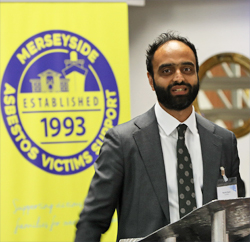 Rachit Buch specialises in personal injury and industrial disease focusing on mesothelioma claims and other asbestos-related diseases.
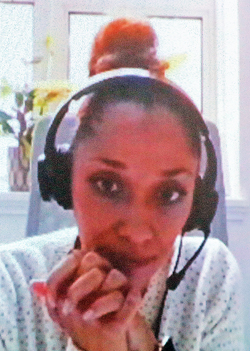 Ishbel Straker is the Chief Executive Officer of ISC-CARE Ltd with over a decade of experience in healthcare leadership, led the development and delivery of specialist services supporting trauma, PTSD, neurodivergence, and mental health presentations, working closely with clinicians, commissioners, and partner organisations.
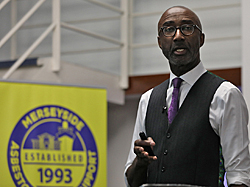 Dr Michael Beckles BSc (Hons) MB ChB FRCP
is a Consultant Respiratory and General Physician at the Royal Free Hospital in London treating patients with all manner of respiratory and general medical complaints, and is a skilled fibre-optic bronchoscopist.
Dr Michael Beckles BSc (Hons) MB ChB FRCP
is a Consultant Respiratory and General Physician at the Royal Free Hospital in London treating patients with all manner of respiratory and general medical complaints, and is a skilled fibre-optic bronchoscopist.
Patrick Kerr as the Chair for the day, opened the event with “A warm welcome to everyone, especially the students”, and noting that guest speaker Master Eastman was unfortunately taken ill and could not be in attendance. He added that "we all wish him a speedy recovery".
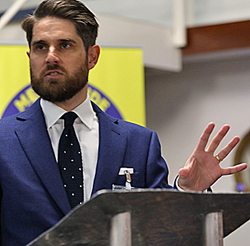 The opening speaker was Dave Maddison who spoke about low level asbestos exposure and understanding the uncertainties and why they matter. For example, working with an ACM with a low propensity for fibre release or the presence and disturbance of ACMs in poor condition.
Dave presented various legal cases and judgements that have led the ACM Overall conclusion that any increase in risk of the order of 0.1% or less and that such a small increase does not satisfy the test of materiality. There now appears to be no consensus on ‘Low level’ asbestos exposure, significant exposure or substantial exposure and the interpretation remains a matter for the Court to consider concentration, exposure and dose. With cumulative exposures, there are uncertainties
with estimation of circumstances where exposure is alleged to have occurred, the intensity and duration of occurred.
The influence of exposure and dose estimates on medical opinion in respect of ‘material increase in risk’ remains subject to interpretation of a medical expert.
Ian Bailey, Partner, KP Law, presentation was entitled "The UK Johnson & Johnson Baby Powder Litigation". The World Health Organization’s International Agency for Research on Cancer (IARC) classified talc as “probably carcinogenic” in 2024, particularly in relation to ovarian cancer.
There has been a marked change in the type of clients that are seen by legal firms, from the old tradesmen to more females and people who have not worked in the usual old industries. The experience of talc shows that manufacturers were a major voice in the room setting stands on safety and funding research which if they didn’t not like an outcome it was buried.
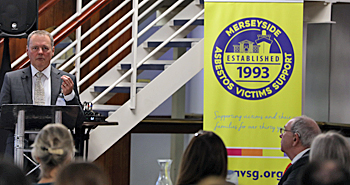 Ian spoke about a Group Product liability claim which was issued October 2025 against three defendants, including a US company and is ongoing but as yet no trial date has been set. The conditions claimed for are pleural mesothelioma, peritoneal mesothelioma, ovarian cancer and non-malignant conditions. Conditions set were use of talc for a period of not less than five years and the cancer presented no earlier than 10 years prior to clinical onset.
Talc is mined all over the world but principally from Italy, Australia, China and India. It is a mineral and fibrous, serpentine (chrysotile) and amphibole form (tremolite, actinolite), importantly - talc and asbestos minerals co-exist naturally. Asbestos is found in talc deposits and it was shown that (some) baby powder was contaminated but knowingly marketed baby powder as being pure knowing that it was not and created a foreseeable risk of injury, which clearly sought to deceive consumers, misleading the public and regulators.
There will be a further directions hearing in July 2026, no decision yet on initial dispositive issues for Determination and no agreement on overall approach, expected a trial date late 2027.
Rachit Buch specialises in personal injury and industrial disease focusing on mesothelioma claims and other asbestos-related diseases, his topic was based on CCC v Sheffield Teaching Hospitals, “Lost years after CCC - what's changed”.
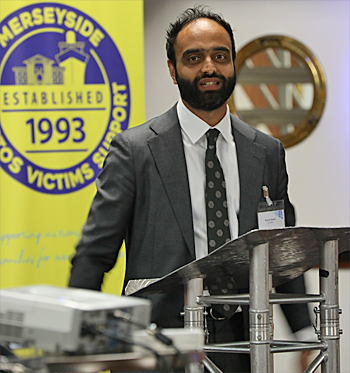 The Issue in CCC was are the loss of earnings during the lost years of an infant or young child recoverable, severe hypoxic brain injury caused by clinical negligence. It was decided that the essential chain of reasoning that it was the quality of evidence, not the age of C, that determines the issue irrelevant whether C an infant. The difficulty of assessment is not a reason for disallowing award.
The Supreme Court did not decide what deduction should be made for living expenses. In principle, the award compensates for earnings the claimant would have been free to spend as they wished, so the proportion that would have been used to maintain their lifestyle (their living expenses) must be deducted to achieve restitutio in integrum. This is a broad loss which focusses on current loss to claimant of reduced life expectancy. The court subsequently noted that “…it would be desirable to clarify when the opportunity arises, as it mayhave implications for the damages recoverable in some cases.”
Ishbel Straker is the Chief Executive Officer of ISC-CARE Ltd and spoke about an issue currently identified by the CWU as being a major mental health issue affecting it's membership. Her presentation was entitled “Recognising and Managing Vicarious Trauma for Legal Professionals”, and joined the conference remotely.
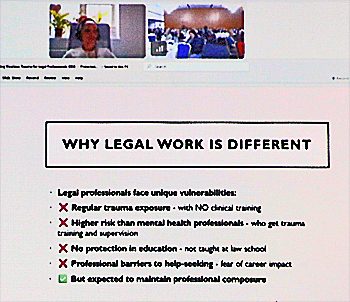 She explained that Vicarious Trauma is an occupational injury, not a personal weakness and that put simply, it is a natural process and is your brain doing what brains do with trauma exposure.
Chronic symptoms can develop if you do not have an early intervention and support. With it, chronic symptoms and illness can be avoided. Specifically talking about legal services industry, she said that 69% of UK lawyers experienced mental ill-health - you are not alone.
She explained too that Professional boundaries are acts of self-preservation, not lack of compassion, and that a lawyers well-being enables him/her to be empathic and provide full advocacy.
Dr Michael Beckles BSc (Hons) MB ChB FRCP is a Consultant Respiratory and General Physician at the Royal Free Hospital in London treating patients with all manner of respiratory and general medical complaints, and is a skilled fibre-optic bronchoscopist.
He explained that Asbestos exposure causes four diseases, in increasing order of seriousness:
Pleural plaques — discrete fibrous patches on the lining of the chest wall. Usually asymptomatic. A reliable marker that exposure occurred.
Diffuse pleural thickening — a continuous sheet of fibrosis on the visceral pleura, which traps the lung and produces breathlessness.
Asbestosis — fibrosis of the lung tissue itself. Dose-dependent, almost always from heavy historical exposure.
And
Mesothelioma — the malignant tumour of the pleural lining. No demonstrated safe threshold, latency of twenty to sixty years, median survival under a year and a half.
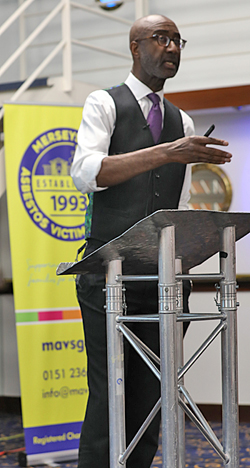 The first three are dose-related; mesothelioma essentially is not, in the sense that there is no level of exposure that can confidently be declared safe.
Dr Beckles continued by discussing each of these diseases in detail, displaying x-ray images of the conditions and how they affect the lungs.
Discussing the fact that Asbestos is not one single mineral, he advised the form it takes:
Serpentine · curly, flexible fibres
– Chrysotile (white asbestos) — >95% of historic UK use
Amphibole · straight, needle-like fibres
– Amosite (brown), Crocidolite (blue)
– Tremolite, actinolite, anthophyllite (contaminants)
His talk went into great detail of the diseases and explained in practical terms how the evidence of the diseases and causes are not simple to define in terms of court proceedings and compensation.
He used a couple of case studies to outline the depth of the difficulties in gathering evidence of the different diseases and the factors relating to exposure to Asbestos.
In conclusion he advised that:
There are Five take-homes — one for each constituency in this room.
For everyone: asbestos causes pleural plaques, diffuse pleural thickening, asbestosis, and mesothelioma. The first three are dose-related; mesothelioma essentially is not.
For lawyers: Bradford Hill is a structured way of weighing evidence — not a checklist. For asbestos and mesothelioma the case for general causation is, in Hill's own word, unanswerable.
For claimants: domestic, para-occupational, and short-burst exposures are real risks — they are quantifiable, they are sizeable, and they have historically been over-discounted by both medicine and law.
On Johnstone: a judgment that mistakes cohort-average risk for individual risk, and that compares an unknown numerator with an uncertain denominator, is not science — whatever its legal outcome.
Looking ahead: direct risk assessment is now permissible, but it is not mandatory. Future expert evidence must engage with its limits — not silently adopt them.
Law Students in attendence:
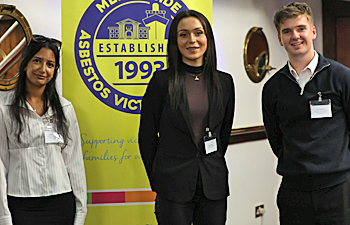
L-R: Amram Dhariwal, Roisin Hynes, Tom Rostron
MAVSG Stall with Conference Administrators
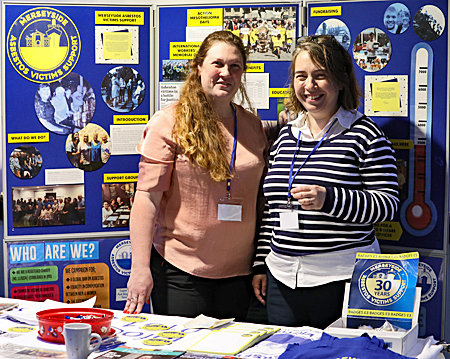
L-R Helen and Karen
Reflections Of Asbestos And The Law Conference 2026
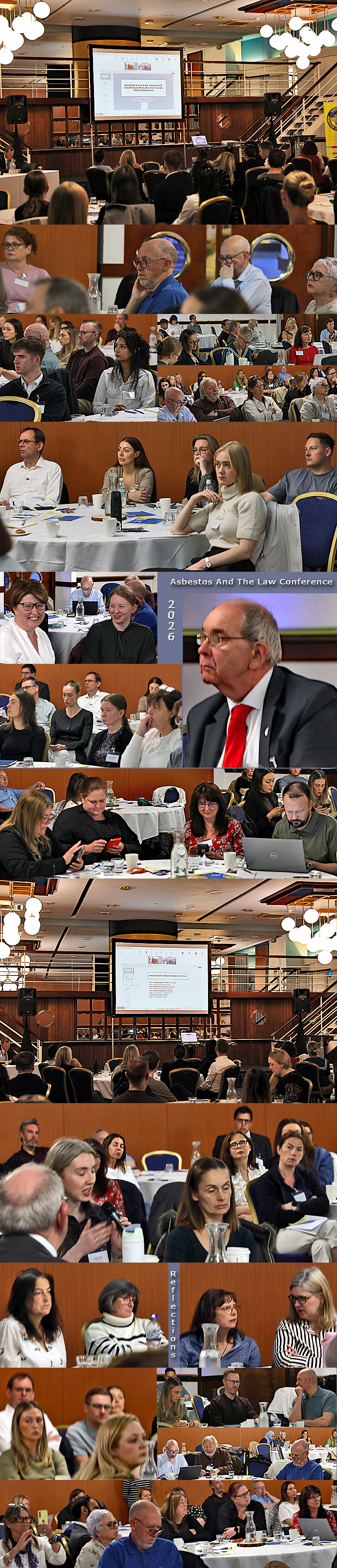
See also: MAVSG.org website for information on Asbestos and Mesothelioma support
